
Introduction
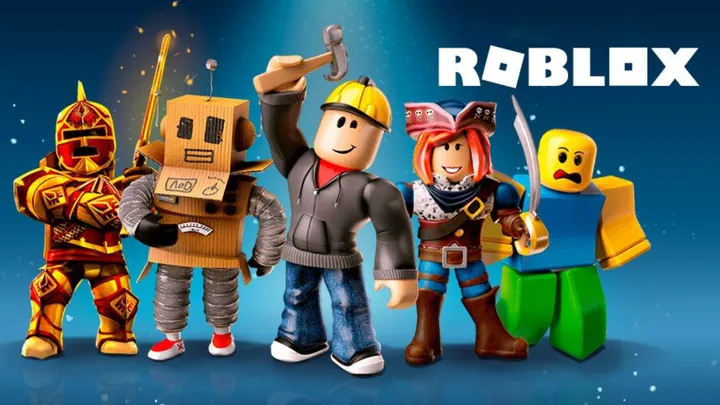
In recent years, Roblox has evolved far beyond a simple game platform into a massive creator-driven economy. One of its most ambitious updates—the expansion of the UGC (User-Generated Content) system—was meant to empower creators and decentralize item creation. However, this shift has introduced a new and increasingly critical issue: UGC economy imbalance.
This is not a surface-level problem. It affects creators, players, item value, in-game economies, and even the long-term sustainability of monetization. While Roblox promotes openness and creativity, the unintended consequences of mass UGC production are beginning to reshape the ecosystem in ways many players don’t fully understand.
This article explores the issue in depth, following its timeline, mechanics, and real impact—step by step.
The rise of the UGC system and why it changed everything
Understanding the original purpose of UGC
When Roblox introduced UGC, the idea was simple: allow selected creators to design and sell avatar items. This broke away from the traditional centralized catalog controlled only by Roblox itself.
The benefits were immediate:
- More creative diversity
- Faster item production
- Community-driven trends
However, what started as a controlled program quickly expanded into a semi-open system, allowing far more creators to participate.
Why expansion led to instability
The moment UGC scaled up, the balance between supply and demand began to collapse. Instead of scarcity, the market shifted toward oversaturation.
Core issue:
- Too many similar items
- Too little differentiation
- Rapid price undercutting
This created the foundation for the imbalance we see today.
How oversupply is destroying item value
The mechanics of oversupply
In any economy, value depends on scarcity. With UGC, scarcity has almost disappeared.
Thousands of items are uploaded daily:
- Similar hats
- Recolored accessories
- Slightly modified designs
This leads to a race to the bottom in pricing.
Consequences for item value
Instead of items gaining prestige, they quickly lose relevance.
Key effects:
- Short lifespan of new items
- Reduced resale potential
- Lower perceived quality
Players no longer see items as collectibles—they see them as disposable.
The pricing war: why cheaper is not better
Undercutting as a dominant strategy
Creators often lower prices to compete. While this seems logical, it creates a destructive loop.
Cycle of price collapse:
- Creator A releases item at 100 Robux
- Creator B undercuts at 80
- Creator C drops to 50
- Market stabilizes at unsustainable low
Long-term damage
This pricing war reduces incentives for high-quality design.
Result:
- Less effort per item
- Faster production cycles
- Lower overall marketplace quality
Cheap items dominate, but meaningful creations become rare.
The algorithm problem: visibility vs quality
How discovery systems influence the market
Roblox relies heavily on algorithms to surface items. However, these systems prioritize engagement over quality.
What gets promoted:
- Trending items
- Frequently clicked products
- Mass-produced designs
What gets buried:
- Unique but niche creations
- High-effort designs with low initial traction
Why this matters
Creators are incentivized to optimize for visibility, not creativity.
This leads to:
- Copycat trends
- Repetitive designs
- Reduced innovation
The impact on small creators trying to enter the market
Barriers disguised as opportunities
While UGC appears open, new creators face hidden challenges.
Key difficulties:
- High competition saturation
- Low initial visibility
- Need for marketing skills
Reality check
New creators are not just competing on design—they are competing on:
- Timing
- Trend awareness
- Algorithm understanding
Without these, even good designs fail.
Player behavior shifts: from collecting to consuming
Changing player psychology
Players used to value rare and meaningful items. Now, behavior is shifting toward rapid consumption.
New player habits:
- Buying cheap, disposable items
- Following short-term trends
- Ignoring long-term value
Why this is happening
Oversupply reduces emotional attachment.
When everything is available:
- Nothing feels special
- Ownership loses meaning
The hidden inflation problem inside Roblox economies
Understanding “soft inflation” in UGC
Even if prices drop, inflation still exists—but in a different form.
Soft inflation means:
- More items entering the market
- Less attention per item
- Reduced earning potential per creator
Effect on creators
To earn the same amount, creators must:
- Produce more items
- Release more frequently
- Compete harder
This leads to burnout and reduced quality.
Exploits, cloning, and content duplication issues
The rise of low-effort replication
Another major issue is item cloning.
Common practices:
- Slight edits of existing designs
- Color swaps
- Trend copying
Why it’s hard to stop
Detection systems struggle with:
- Minor variations
- High upload volume
- Rapid trend cycles
Impact on the ecosystem
Original creators lose:
- Revenue
- Visibility
- Motivation
Roblox’s response and why it’s not enough yet
Current measures introduced
Roblox has attempted to stabilize the system through:
- Moderation improvements
- Creator guidelines
- Limited item systems
Limitations of these solutions
The core problem remains:
- Supply still exceeds demand
- Discovery systems still favor trends
- Economic balance is not restored
What’s missing
A deeper structural change is needed, not just surface-level fixes.
Potential future solutions and what could actually work
Rebalancing the UGC economy
For the system to stabilize, several changes could help:
Possible solutions:
- Stricter upload limits
- Better originality detection
- Improved recommendation algorithms
Encouraging quality over quantity
Roblox could shift incentives toward:
- High-effort designs
- Unique creations
- Long-term item value
This would restore balance between creativity and competition.
What this means for the future of Roblox
A turning point for the platform
The UGC imbalance is not just a temporary issue—it’s a structural challenge.
Two possible futures:
- A saturated marketplace with declining value
- A refined ecosystem focused on quality and sustainability
Why this matters
Roblox’s identity depends on its creator economy. If that economy weakens, the entire platform is affected.
Conclusion
The expansion of UGC in Roblox was a bold and transformative step, but it has introduced a complex economic imbalance that cannot be ignored. Oversupply, pricing wars, algorithm bias, and content duplication are all interconnected issues shaping the current state of the platform.
This is not simply a creator problem or a player problem—it is a system problem. And like all system problems, it requires systemic solutions.
Understanding this issue gives you an advantage. Whether you are a player, a buyer, or a creator, recognizing how the UGC economy works allows you to navigate it more intelligently and avoid its pitfalls.