.webp)








 Introduction
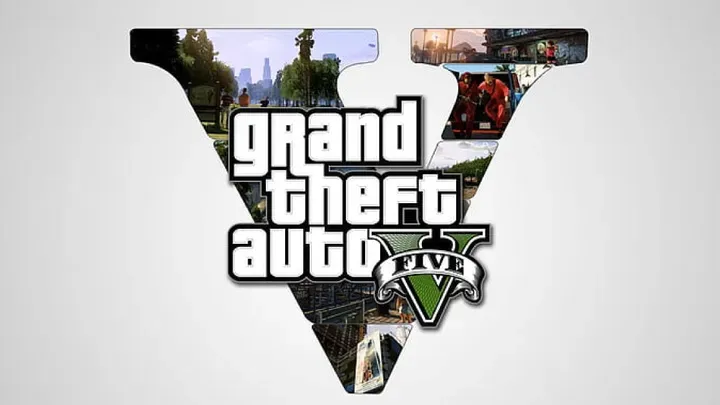
Released in 2013, Rockstar Games’ *Grand Theft Auto V* (GTA V) is one of the most financially successful entertainment products in human history. While its single-player narrative received critical acclaim, the game's unprecedented longevity is entirely driven by its multiplayer counterpart, *Grand Theft Auto Online* (GTA Online). What began as a chaotic multiplayer sandbox has evolved over more than a decade into a complex, pseudo-corporate crime simulator. Central to this evolution is the game's virtual economy, underpinned by the "GTA Dollar" ($GTA). However, beneath the surface of this multi-billion-dollar enterprise lies a profound macroeconomic crisis: severe hyperinflation and systemic economic stratification. Over its lifespan, the purchasing power of the GTA Dollar has eroded dramatically. As Rockstar Games introduced increasingly expensive weaponized vehicles, subterranean facilities, and luxury businesses, the cost of content skyrocketed. This deep dive examines the mechanical causes, developer interventions, and player counter-responses to the decade-long inflationary crisis that transformed the streets of Los Santos into a playground for the ultra-wealthy, while alienating the working-class player base. ---
The Dawn of the Los Santos Economy (2013-2014)
When GTA Online launched in October 2013, its economic landscape was remarkably grounded. The most expensive asset a player could purchase was the Eclipse Towers Apartment Tower Penthouse, costing a modest $400,000 GTA. The ultimate status symbol of performance was the Truffade Adder, a supercar modeled after the Bugatti Veyron, priced at exactly $1,000,000 GTA. During this foundational period, player payouts were similarly modest; completing contact missions for characters like Lamar or Martin Madrazo yielded between $5,000 and $20,000 GTA, while robbing convenience stores netted a few hundred bucks.
This early economy resembled a traditional, linear progression system where financial goals were tightly bound to time investment. A player could reasonably buy a high-end garage and a competitive sports car after a week of casual gameplay. However, this balance was highly fragile. Because the infrastructure relied heavily on peer-to-peer networking, the game quickly fell victim to severe balance exploits, setting the stage for a permanent shift in how both players and developers valued virtual capital.
---
The Billion-Dollar Bounty and the 'Moneypocalypse' (Winter 2013-2014)
Within months of launch, the primitive security of GTA Online allowed hackers to manipulate the game's memory strings. Rogue players began placing custom bounties on ordinary users worth billions of GTA Dollars. If a player killed someone carrying a hacked bounty, or simply logged into a compromised lobby, their virtual bank accounts were instantly flooded with hundreds of millions, or even billions, of unauthorized GTA Dollars. For a brief window, scarcity ceased to exist in Los Santos; every player could instantly afford every vehicle, modification, and property in the game.
In January 2014, Rockstar Games executed a massive, system-wide server maintenance cycle popularly dubbed the "Moneypocalypse." The developers swept through player accounts, deleting trillions of hacked GTA Dollars while leaving legitimately earned cash untouched. This event was a critical turning point. It proved to Rockstar that an unchecked money supply would completely eliminate the game's progression loop and destroy potential revenue from "Shark Cards"—real-world microtransactions that allow players to buy in-game currency. From this point forward, the fight over the value of the GTA Dollar became a primary design focus.
---
The Heists Update and the First Major Structural Inflation (2015)
The long-awaited arrival of the *Heists Update* in March 2015 fundamentally altered the currency generation capabilities of the player base. For the first time, cooperative multi-stage missions allowed a crew of four players to extract massive payouts, culminating in the *Pacific Standard Job*, which offered a maximum potential reward of $1,250,000 GTA. This introduced the first true "faucet" into the economy, allowing dedicated teams of players to farm hundreds of thousands of dollars per hour with high efficiency.
Predictably, the market responded. To absorb this massive influx of liquidity, Rockstar Games introduced a new tier of luxury consumer goods. The *Ill-Gotten Gains* DLC parts 1 and 2 showcased this shift perfectly, introducing solid-gold airplanes and helicopters, such as the Buckingham Luxor Deluxe, priced at an unprecedented $10,000,000 GTA. This marked the birth of structural hyperinflation in GTA Online: the ceiling for luxury pricing had been raised tenfold, rendering basic mission payouts completely obsolete for anyone wanting to experience new content.
---
The Corporate Shift: Businesses as Faucets and Sinks (2016-2017)
With the release of the *Further Adventures in Finance and Felony* (2016) and *Gunrunning* (2017) updates, the economy pivoted from a mission-based model to a passive, asset-driven corporate simulation. Players were required to purchase multi-million-dollar physical properties—such as CEO Offices, Vehicle Warehouses, and Underground Bunkers—to unlock new methods of generating wealth. These businesses operated on a "passive generation, active sale" loop, where raw materials were converted into high-value illicit goods over real-time hours.
The Dynamic of Hidden Financial Sinks
While these corporate properties acted as incredibly powerful income faucets, they simultaneously introduced insidious, continuous financial "sinks" to bleed player accounts dry. Owning multiple properties meant paying daily utility fees and staff wages, which could easily scale past $20,000 GTA every 48 minutes of real-world playtime. Furthermore, to maximize profit margins, players were forced to purchase expensive equipment and security upgrades costing millions upfront, ensuring that a significant portion of a player's capital remained trapped within the business infrastructure itself.
---
The Weaponized Escalation and the $3 Million Threshold (2017-2018)
The macroeconomic crisis reached a boiling point with the launch of the *Smuggler’s Run* and *The Doomsday Heist* updates in late 2017. Consumer goods were no longer just cosmetic status symbols or standard sports cars; they were heavily weaponized military hardware essential for survival in public lobbies. Vehicles like the Oppressor mobile rocket-bike and the Deluxo flying car completely redefined the meta-game. However, acquiring these tools required an astronomical financial investment.
During this era, the average base price for any new relevant vehicle stabilized at a punishing threshold between $3,000,000 and $5,000,000 GTA. Crucially, the advertised price was often a deceptive entry fee. To actually upgrade these vehicles with homing missiles or defensive countermeasures, players were forced to buy secondary properties like the Mobile Operations Center or the Avenger tilt-rotor aircraft, pushing the true cost of operational viability closer to $7,000,000 GTA per vehicle.
---
The Oppressor Mk II and the Pay-to-Win Stratification (2018-2019)
The release of the *After Hours* update in the summer of 2018 introduced the Pegassi Oppressor Mk II—a hovering, hyper-agile motorcycle equipped with nearly unavoidable tracking missiles. This single vehicle fractured the social and economic fabric of GTA Online. It became the ultimate tool for "griefing" (harassing other players), allowing hostile users to effortlessly destroy rival players' corporate cargo sales in public lobbies, completely erasing hours of passive business investment in a matter of seconds.
The Real-World Financial Math of Los Santos
For a new or casual player, defending against an Oppressor Mk II required owning one themselves, or purchasing heavy counter-vehicles. With the combined cost of the bike, the specialized Terrorbyte truck required to upgrade it, and the necessary night club property scaling past $6,000,000 GTA, a devastating wealth gap emerged. To bridge this gap without spending hundreds of hours grinding, players were heavily incentivized to buy a physical Megalodon Shark Card. Retailing for $99.99 USD in real-world money, this card yielded $8,000,000 GTA—an amount that could buy a full weaponized loadout in 2014, but by 2019, barely covered a single fully upgraded hovering bike and its support infrastructure.
---
The Cayo Perico Disturbance and the Solo-Grind Era (2020-2021)
In December 2020, Rockstar Games inadvertently corrected the economy too far in the opposite direction with the release of the *Cayo Perico Heist*. For the first time in the game's history, a high-payout heist could be executed entirely solo. By purchasing a Kosatka Submarine for a base price of $2,200,000 GTA, a single player could complete the entire preparation cycle and final heist in roughly one hour, walking away with a reliable net profit ranging from $1,300,000 to $1,800,000 GTA.
This completely dismantled the economic relevance of all previous businesses. The Cayo Perico Heist became an overwhelming monetary faucet, injecting trillions of hyper-efficient GTA Dollars into the player base's collective wallets. Why manage a complex network of drug labs or run high-risk vehicle cargo deliveries across the map when a solo heist could generate double the profit in a fraction of the time? The game's diverse business landscape collapsed into a monoculture of solo island raiding, triggering an immediate and unprecedented surge in the total active money supply.
---
The Great Rebalancing and Devaluation Interventions (2022-2023)
Recognizing that the Cayo Perico faucet had trivialized the value of the GTA Dollar and threatened the long-term viability of Shark Card revenue, Rockstar Games launched a series of aggressive rebalancing initiatives throughout 2022 and 2023. These adjustments aimed to curb solo wealth generation while aggressively siphoning cash out of veteran player accounts via direct pricing manipulation.
The Nerfing of the Island and the Buffing of the Streets
First, developers targeted the Cayo Perico Heist directly, increasing the setup fees, lengthening the real-time cooldown timers for solo players to over three hours, and slashing the value of lower-tier primary targets. Concurrently, they boosted the baseline payouts of older activities—such as standard Contact Missions, Open Wheel Racing, and the original Executive Businesses—by up to 50-100%. This was a deliberate effort to decentralize the player base's income sources and slow the velocity of currency generation.
Arbitrary Price Hikes on Legacy Assets
To address the massive amounts of liquid cash sloshing through the system, Rockstar implemented a sweeping wave of retroactively adjusted vehicle prices in early 2023. Older vehicles that had remained staple meta options for years were hit with staggering price increases to align them with modern inflated standards. This intervention starkly illustrated how the baseline purchasing power of the GTA Dollar had permanently eroded, as seen in the following drastic pricing shifts:
* **Pegassi Oppressor Mk II:** Increased from $3,890,250 GTA to a staggering **$8,000,000 GTA**. * **Declasse Ruiner 2000:** Adjusted upward to **$5,750,000 GTA**. * **Buckingham Akula Attack Helicopter:** Raised from $3,704,050 GTA to **$4,500,000 GTA**. * **Imponte Deluxo:** Escalated from $4,721,500 GTA to **$5,750,000 GTA**. ---
The Modern Corporate Meta and Criminal Careers (2024-2025)
By 2024 and continuing into 2025, the hyper-inflated economy forced Rockstar to completely abandon the classic "start from nothing" philosophy for new players. To prevent incoming users from quitting out of sheer financial despair, developers integrated the *Criminal Enterprise Starter Pack* and the "Career Builder" mechanic directly into the modern version of the game. New characters were instantly gifted a free corporate property, high-end vehicles, weapons, and a baseline capital injection of $4,000,000 GTA just to ensure they could survive the baseline entry requirements of the modern world.
The contemporary meta-game has settled into a highly optimized, cross-functional corporate routine. Players utilize advanced properties like the *Chop Shop* Salvage Yards or the Mercenary *Avenger* operations to execute high-tier robberies. However, because standard supercars now routinely launch at baseline prices exceeding $4,500,000 GTA without modifications, the structural reality remains unchanged: new content is explicitly tuned for multi-millionaires, requiring constant economic maintenance from the player base.
---
The Legacy of the GTA Dollar: Lessons for Future Sandboxes (2026)
Looking back across more than a decade of economic evolution, the financial trajectory of Los Santos serves as a legendary cautionary tale for game designers worldwide. The uncontrolled inflation of the GTA Dollar was not an accident; it was the inevitable byproduct of a sandbox that paired continuous, limitless content generation with real-world monetization hooks. When a game developer ties the scarcity of virtual currency to real-world profitability, the organic balance of progression is systematically deprioritized in favor of financial thresholds that encourage spending.
This multi-year crisis has fundamentally transformed how open-world multiplayer economies are conceptualized. By observing how players universally shifted their behavior toward hyper-efficient solo grinds like Cayo Perico, or how public lobbies descended into class warfare between weaponized vehicle owners and low-level pedestrian players, the industry has gained invaluable data. The legacy of the GTA Dollar proves that without strict structural caps on asset pricing and highly guarded currency faucets, a virtual economy will inevitably mirror the starkest inequities of real-world capitalism.
---
Conclusion: The Sunset of Los Santos
In conclusion, the decade-long economic journey of *Grand Theft Auto Online* highlights the incredible volatility of unmonitored virtual marketplaces. Rockstar Games constructed a magnificent, deeply engaging corporate playground, but its foundation was permanently altered by hyperinflation. To keep pace with a hyper-wealthy veteran player base and protect microtransaction revenue, the costs of basic experiences were scaled to astronomical heights, fundamentally severing the connection between early-game effort and late-game reward.
As the sun slowly sets on this iteration of Los Santos, the financial history of the GTA Dollar stands as a monument to modern gaming culture. It remains a fascinating social and economic case study—a world where the american dream was successfully simulated, commercialized, and ultimately inflated out of reach for the very average citizens who built its empire from the asphalt up.