
Rainbow Six Siege News 2026: Operation Split Fire Mid-Season Update, Noor Buffs, and Legend Division
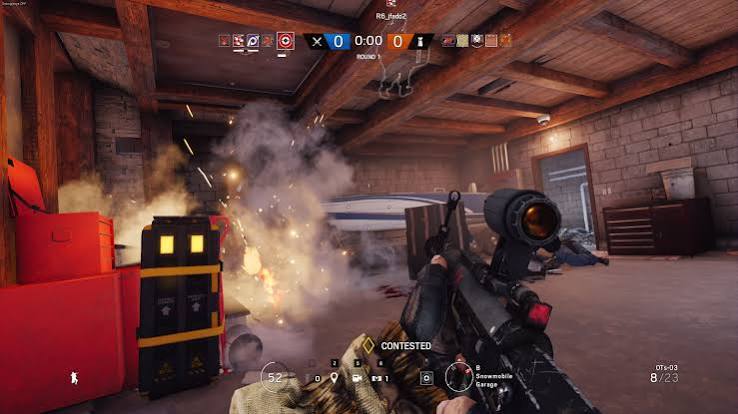
Rainbow Six Siege is experiencing another significant competitive transformation in 2026 as Ubisoft continues expanding the tactical shooter through operator adjustments, ranked improvements, map updates, and seasonal events. The arrival of Year 11 Season 3, officially known as Operation Split Fire, introduced several important changes to the game's competitive environment. However, the October mid-season update has become particularly noteworthy because it directly addresses operator effectiveness, high-level competition, and the evolving ranked experience.
Released on September 1, 2026, Operation Split Fire introduced Noor, a new Egyptian defender designed to counter shield-based attacks, alongside improvements to Villa, additional balancing changes, and new gameplay activities. The October 15 mid-season update builds upon that foundation with substantial improvements to Noor's Horus Lance Launcher, the introduction of Legend Division, and another ranked map rotation. Together, these developments demonstrate Ubisoft's continuing effort to refine tactical gameplay while offering experienced players new competitive challenges.
Unlike a general overview of Rainbow Six Siege, this news article examines how Operation Split Fire's October 2026 mid-season update is changing operator balance, ranked competition, defensive strategies, and the future of competitive Siege. It explores the most important announcements in chronological order, explains their tactical implications, and evaluates what these developments could mean for players approaching the final weeks of Year 11 Season 3.
News coverage updated: October 27, 2026.
1. Operation Split Fire Establishes the Foundation for Rainbow Six Siege's Latest Competitive Changes
Operation Split Fire officially launched on September 1, 2026, marking the beginning of Rainbow Six Siege Year 11 Season 3. The update introduced new content across several areas of the game, including operator design, map layouts, competitive progression, and alternative gameplay experiences. Rather than concentrating exclusively on adding another playable character, Ubisoft positioned the season as an opportunity to improve tactical decision-making and address competitive priorities identified throughout Year 11.
One of the most important aspects of Operation Split Fire is its emphasis on strengthening the traditional tactical experience. Rainbow Six Siege has always relied on information gathering, destructible environments, operator interactions, and coordinated team movement. The latest season continues that direction by introducing tools that challenge established strategies while revisiting existing systems that influence competitive consistency.
The September release also established the groundwork for changes arriving later in the season. Some features were available immediately, while others, including Legend Division, were scheduled for the mid-season period. This approach allows the game to evolve throughout the season rather than concentrating every major development on launch day.
Major features introduced during Operation Split Fire
The season's most important additions include:
- New defender Noor: An Egyptian operator specializing in countering shield-based threats.
- Villa map changes: Adjustments designed to improve objective-site variety.
- Operator balancing: Updates affecting several established attacking and defending operators.
- Legend Division: A new competitive environment for highly ranked players.
- Modernized maps: Visual improvements to selected maps and training environments.
- 3v3 Arcade: An additional smaller-team gameplay experience.
- Seasonal events: Limited-time activities offering alternative gameplay and cosmetic rewards.
These additions address different parts of the Rainbow Six Siege experience, but they share an important objective: encouraging players to adapt their strategies.
Why the seasonal structure matters
Ubisoft previously outlined a Year 11 content philosophy involving more frequent updates and regular balancing adjustments.
This structure is particularly important for competitive games because a single powerful operator or dominant strategy can influence the entire ranked environment.
Competitive significance
Players should expect their established strategies to require periodic adjustments as operator interactions, map rotations, and balance changes evolve throughout the season.
2. Noor's September Debut Introduces a New Defensive Counter to Shield Operators
Noor arrived as one of Operation Split Fire's most significant gameplay additions. The Egyptian defender introduces a specialized approach to countering shield operators, who can create substantial pressure when attackers coordinate their movement and utility effectively. Shield-based attacks often depend on forcing defenders away from protected positions, absorbing incoming fire, and allowing supporting attackers to advance.
Noor's primary ability, the Horus Lance Launcher, challenges that approach by deploying projectiles capable of interacting with shields and environmental surfaces. Its design creates opportunities to pressure attackers who depend on maintaining protected positions. Instead of simply attempting to eliminate shield operators through conventional gunfire, defenders can use Noor's specialized equipment to disrupt their movement and challenge their positioning.
The operator's introduction also expands defensive composition possibilities. Teams that previously relied on combinations of traps, explosives, and coordinated crossfires against shield attackers now have another specialized option. However, the effectiveness of this approach depends on timing, positioning, and the defender's ability to use the launcher before attackers establish overwhelming pressure.
Noor's equipment and tactical identity
Noor's equipment includes several options supporting different defensive responsibilities.
Primary weapons
- Commando-9
- Alda 5.56
Secondary weapons
- TACOPS 1911
- Bailiff 410
Secondary gadgets
- Barbed wire
- Deployable shield
Unique ability
- Horus Lance Launcher
This equipment allows Noor to participate in conventional defensive engagements while maintaining a specialized role against shield-based pressure.
How Noor changes defensive planning
Noor creates additional decisions for both teams.
Defenders must determine where the Horus Lance provides the greatest value, while attackers must consider whether their shield-based entry routes expose them to its effects.
The operator is particularly relevant when attackers rely heavily on maintaining a protected forward position.
The limitations of specialized counters
Although Noor provides additional defensive options, selecting the operator does not automatically neutralize a coordinated shield attack.
Attackers can still exploit information advantages, supporting fire, and alternative entry routes.
Tactical implication: Noor's greatest value comes from coordinated defensive positioning rather than isolated attempts to challenge an entire attacking team.
3. Villa's September Map Update Changes Objective Selection and Defensive Planning
Villa received a targeted map update during the September launch of Operation Split Fire. Unlike visual modernization projects that primarily improve lighting, textures, and presentation, this update changes elements of the map's playable structure. The most notable adjustment relocates the Living Room/Library objective from the first floor to the basement, supported by permanent layout modifications intended to make alternative defensive sites more viable.
This change matters because objective placement directly influences how attackers approach a building and how defenders distribute their resources. A basement objective introduces different considerations for vertical control, reinforced walls, staircases, and rotation routes. Teams familiar with Villa's previous layout must reconsider their established strategies rather than relying entirely on memorized defensive setups.
The broader purpose of the update is to encourage greater variety in objective selection. When teams repeatedly choose the same defensive locations, matches can become predictable. Creating another viable objective gives defenders additional strategic options while forcing attackers to prepare for a wider range of situations. Ubisoft confirmed these changes as part of Operation Split Fire's September release.
How the relocated objective affects defenders
Defenders must reconsider several elements of their preparation.
Important areas include:
- Reinforcement priorities around the relocated objective.
- Staircase coverage and vertical pressure.
- Rotation routes between defensive positions.
- Information gathering around basement approaches.
- Operator combinations suited to the revised layout.
- Safe positions for delaying attackers.
A basement objective may encourage defenders to establish stronger control over nearby staircases and upper-floor areas.
However, committing too many operators to distant positions can leave the objective vulnerable to a coordinated attack.
New opportunities for attacking teams
Attackers must identify which areas provide the greatest influence over the revised objective.
Instead of relying on familiar routes, teams should investigate the new site geometry and determine how destructible surfaces influence engagements.
Potential attacking adjustments
- Reevaluate drone routes during preparation.
- Identify reinforced surfaces protecting important entries.
- Investigate vertical attack opportunities.
- Establish control of nearby staircases.
- Coordinate utility removal before the final execution.
The competitive importance of targeted map updates
Targeted map changes can be particularly valuable because they improve strategic variety without necessarily requiring an entirely new environment.
For experienced players, the Villa update creates an opportunity to develop new strategies before the revised layout becomes fully familiar to the wider community.
Competitive outlook: Teams that adapt their objective setups and attacking routes quickly may gain an early advantage over opponents relying on outdated map knowledge.
4. September's Operator Balancing Changes Prepare the Game for a Different Competitive Meta
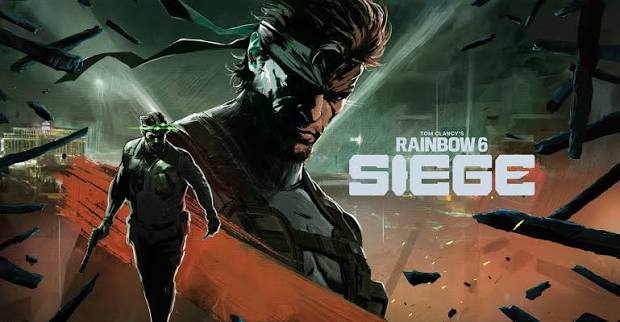
Operation Split Fire also introduced balancing adjustments affecting several established operators. Ubisoft identified Kali, Dokkaebi, Lion, Echo, Kapkan, and other gameplay elements among the season's balancing priorities. These changes demonstrate that the developer is not treating the introduction of Noor as an isolated addition but is continuing to refine the interactions between existing operators and their equipment.
Operator balancing is particularly important in Rainbow Six Siege because even small adjustments can influence the effectiveness of entire strategies. An improvement to information gathering may change how attackers clear defensive positions, while a modification to defensive utility can influence which operators teams prioritize during selection. Consequently, competitive balance cannot be evaluated solely by comparing weapon statistics.
The September changes also established the context for the October mid-season update. By adjusting existing operators while introducing Noor, Ubisoft created a new tactical environment that required additional observation and refinement. The subsequent October changes suggest that the developer is willing to revisit operator effectiveness within the same season rather than waiting for the next major release.
Why operator balancing affects team composition
Competitive teams usually build compositions around several essential responsibilities.
These include:
- Information gathering.
- Reinforced-wall destruction.
- Electronic utility disruption.
- Entry denial.
- Area control.
- Anti-shield capabilities.
- Objective protection.
When an operator becomes more effective at fulfilling one of these responsibilities, teams may reconsider their established combinations.
For example, improvements to a defender's area-denial capabilities could make that operator more attractive for objective sites requiring extensive protection.
Understanding the relationship between balance and strategy
A stronger gadget does not automatically make an operator the best choice for every situation.
Its effectiveness depends on map geometry, team coordination, opposing operators, and the amount of utility available.
Players should therefore evaluate balance changes through practical gameplay rather than relying exclusively on individual statistics.
What players should monitor
The most useful indicators of a changing competitive environment include:
- Operator selection frequency.
- Common operator bans.
- Successful attacking compositions.
- Defensive utility combinations.
- Changes in objective-site preferences.
- New counterstrategies developed by experienced teams.
Key observation: Operation Split Fire's balancing direction emphasizes tactical interaction rather than simply increasing the effectiveness of individual weapons.
5. October 15 Mid-Season Update Delivers Major Improvements to Noor's Horus Lance
The October 15, 2026, mid-season update represents one of the most important developments of Operation Split Fire. After evaluating gameplay data and player feedback, Ubisoft introduced substantial improvements to Noor's Horus Lance Launcher. These changes address several aspects of the gadget, including deployment speed, drilling time, direct impact damage, and effectiveness against ballistic shields.
The most significant adjustment concerns the Horus Lance's ability to challenge shield operators. Its Guardbreak strength on projectile impact against ballistic shields increased from 30% to 100%, providing a much stronger disruption effect. The launcher also became faster to equip, allowing Noor to react more effectively when attackers approach defended positions.
These adjustments indicate that Ubisoft wanted Noor to perform more consistently within his intended defensive role. A specialized counter must be sufficiently reliable to justify its selection, particularly when defenders sacrifice alternative utility by choosing it. The October update strengthens Noor's ability to influence shield engagements while maintaining the importance of tactical positioning.
Confirmed Horus Lance improvements
The October Y11S3.2 changes include:
AttributeBefore updateAfter updateDrilling time2 seconds1.5 secondsGuardbreak strength30%100%Launcher equip time0.9 seconds0.4 secondsDirect impact damage5080Projectile hitboxPrevious behaviorImproved consistency
These adjustments collectively improve the launcher rather than concentrating on a single statistic.
Why faster deployment matters
The reduction in equip time is particularly important during unexpected encounters.
Previously, Noor could be forced to choose between preparing the launcher and maintaining immediate weapon readiness.
A faster deployment animation reduces that vulnerability, although players must still account for the risks associated with switching equipment during combat.
How the Guardbreak improvement changes shield encounters
Shield operators frequently create pressure by approaching defended positions while limiting their exposure to conventional gunfire.
The stronger Guardbreak effect gives Noor a more reliable way to disrupt that approach.
However, shield operators can still receive support from teammates, making coordinated positioning essential.
The significance of increased impact damage
Increasing direct impact damage from 50 to 80 makes successful hits more threatening.
This improvement may force attackers to respect Noor's line of sight and avoid predictable movement patterns.
Competitive implication: Noor is now a more credible specialized defensive selection, particularly against attacking compositions that depend heavily on shield pressure.
6. Tachanka, Valkyrie, and Solid Snake Receive Important Mid-Season Adjustments
Beyond Noor's improvements, the October update introduces several changes to established operators. Tachanka receives additional control over his Shumikha Launcher, Valkyrie gains another secondary weapon option, and Solid Snake experiences a reduction in his information-gathering resources. These adjustments address different gameplay concerns, including gadget responsiveness, environmental destruction, and the frequency with which powerful information tools can be used.
Tachanka's adjustment is particularly notable because it changes how players can deploy his incendiary projectiles. Previously, the launcher depended on bouncing projectiles to reach selected positions. The new firing option allows incendiary grenades to trigger on impact, providing greater control in situations where immediate area denial is required. Players can still use the existing bouncing behavior when indirect deployment offers a tactical advantage.
Valkyrie's new Glaive-12 secondary weapon option gives her additional flexibility when creating sightlines and preparing defensive positions. Meanwhile, Solid Snake's Soliton Radar MK III receives a reduction in precision-mode charges from four to three. Ubisoft's official designer notes explain that this adjustment is intended to encourage more deliberate use of Snake's information-gathering ability.
Tachanka gains greater control over area denial
The Shumikha Launcher now supports an additional firing behavior.
Players can choose between:
- Impact activation: Useful when immediate incendiary deployment is necessary.
- Bouncing projectiles: Useful for reaching positions indirectly or applying pressure from safer angles.
This flexibility may improve Tachanka's usefulness during late-round defensive situations.
Tactical significance
Defenders can react more quickly to attackers entering critical areas without relying exclusively on projectile bouncing.
However, effective positioning and resource management remain essential.
Valkyrie receives the Glaive-12
Adding the Glaive-12 expands Valkyrie's options for preparing the defensive environment.
The weapon can help create openings and sightlines while allowing Valkyrie to maintain her information-focused identity.
This adjustment may make her more convenient in team compositions that previously required another operator to perform certain preparation tasks.
Solid Snake receives a targeted reduction
Solid Snake's Soliton Radar MK III now has three precision-mode charges instead of four.
The change reduces the number of opportunities available for detailed radar investigation.
Potential consequences
- Players must prioritize important information.
- Unnecessary radar usage becomes more costly.
- Teammate coordination becomes more valuable.
- Defensive information denial may become more effective.
Additional operator refinements
Other confirmed October adjustments include:
- Capitão receives faster fire expansion timing.
- Clash becomes more effective at slowing enemies retreating from her.
- Osa receives fewer restrictions when deploying her Talon-8 Clear Shield.
These changes are smaller than Noor's improvements but may still influence individual engagements.
Competitive outlook: The mid-season balancing update rewards players who understand operator utility and adapt their decisions to the latest equipment behavior.
7. Legend Division Launches on October 15 as Rainbow Six Siege's New Elite Competitive Playlist
One of the biggest announcements of the October mid-season update is the official introduction of Legend Division. This new competitive playlist operates above Champion rank and targets the highest-performing Rainbow Six Siege players. Rather than simply adding another conventional ranked tier, Ubisoft has created a separate competitive environment designed to emphasize individual performance, competitive integrity, and leaderboard progression.
Legend Division launched on October 15, 2026, and its first season is scheduled to conclude on December 1, 2026. The playlist uses solo queue matchmaking, meaning players cannot depend on entering matches with their usual coordinated squads. This creates a different competitive challenge because participants must communicate effectively with unfamiliar teammates and adapt quickly to different playstyles.
The playlist also uses the same map pool as professional competition, further emphasizing its competitive identity. By combining demanding entry requirements with a specialized matchmaking environment, Ubisoft aims to create a meaningful challenge for players who have already reached the highest levels of the standard ranked system.
Legend Division entry requirements
Players must satisfy several conditions before entering the playlist.
These include:
- Reaching Champion rank during the current season.
- Reaching at least Platinum rank in the previous season.
- Achieving clearance level 200 or higher.
- Maintaining Reputation Standing Level 3 or above.
- Enabling Secure Boot.
- Activating app-based two-factor authentication.
These requirements establish a higher entry threshold than ordinary ranked matchmaking.
Why solo queue changes the competitive experience
Solo queue introduces additional uncertainty because players cannot rely on established team chemistry.
Successful participants must demonstrate several abilities:
- Accurate communication with unfamiliar teammates.
- Flexible operator selection.
- Strong individual decision-making.
- Consistent mechanical performance.
- Adaptation to different tactical approaches.
- Effective play under competitive pressure.
These skills are especially important when teammates have different preferred strategies.
Legend Division rewards
Ubisoft has announced exclusive progression rewards for successful participants.
These include an evolving profile banner connected to leaderboard position and a special charm for the top 100 players in each region.
The rewards are designed to recognize exceptional competitive achievement.
What Legend Division means for Champion players
Champion rank has traditionally represented one of the highest competitive achievements in Rainbow Six Siege.
Legend Division introduces another objective for players who have already reached that level.
Competitive significance: The new playlist creates a more specialized environment where elite players can compete for recognition beyond conventional ranked progression.
8. Ranked Map Rotation and Anti-Cheat Improvements Reshape Competitive Integrity
The October mid-season update also changes the ranked map pool. Skyscraper and Theme Park leave the rotation, while Kanal, Outback, and Oregon return. These changes require players to revisit established strategies, especially if they have spent most of the season practicing on a different collection of maps. Familiarity with defensive sites, attacking routes, and common operator combinations can become particularly important immediately after a rotation.
Ubisoft has also acknowledged that the existing ranked map rotation approach has not been received as positively as expected. As a result, the developer plans to introduce a more stable map rotation system beginning with Year 11 Season 4. This represents an important shift in philosophy because competitive players generally benefit from having sufficient time to develop and refine strategies across a consistent collection of maps.
Alongside these gameplay adjustments, Ubisoft continues emphasizing account security and competitive integrity. The October announcement confirmed a ban wave affecting more than 50,000 accounts associated with activities including account sharing, account selling, and ban evasion. These measures accompany the stricter security requirements introduced for Legend Division.
Confirmed October ranked map changes
Maps entering the rotation
- Kanal
- Outback
- Oregon
Maps leaving the rotation
- Skyscraper
- Theme Park
These adjustments alter the range of environments players must prepare for during ranked matches.
Why map stability matters
Frequent map changes can encourage variety, but they can also make consistent competitive preparation more difficult.
Players need time to understand:
- Objective-site layouts.
- Reinforcement strategies.
- Common defensive positions.
- Vertical attack opportunities.
- Operator combinations.
- Effective entry routes.
- Post-plant positions.
A more stable map pool may allow teams to develop greater strategic depth.
The importance of account security
Competitive integrity becomes increasingly important as ranked progression gains additional rewards and recognition.
Security requirements such as Secure Boot and two-factor authentication are intended to strengthen account protection and reduce opportunities for certain forms of abuse.
However, security systems must also be evaluated according to their practical effectiveness and accessibility.
How the ban wave affects competitive confidence
A large enforcement action demonstrates that Ubisoft is actively addressing account-related violations.
Nevertheless, the number of accounts affected does not independently establish how much cheating or account abuse remains in the game.
Competitive outlook: Stronger account protection, improved enforcement, and more predictable map rotations could support a more consistent ranked experience if implemented effectively over time.
9. Doktor's Curse Returns for Halloween With New Operators, Rewards, and Limited-Time Gameplay
The October mid-season period also brings the return of Doktor's Curse, one of Rainbow Six Siege's recognizable Halloween events. The event began on October 15, 2026, and is scheduled to remain available until November 2, 2026, according to Ubisoft's dedicated event announcement. Unlike traditional tactical matches, Doktor's Curse focuses on a modified hide-and-seek experience that replaces conventional gunfights with specialized gadgets, movement abilities, and unusual operator interactions.
The event takes place in a modified version of Clubhouse, where participants are divided into Hunters and Monsters. Hunters attempt to eliminate the opposing team, while Monsters rely on concealment, movement, and specialized equipment to survive. Each match features four rounds lasting two minutes each, creating a faster and more unpredictable experience than standard Rainbow Six Siege gameplay.
This year's event introduces additional playable options, including Grim and Hibana among the Hunters and Mute among the Monsters. Their modified equipment creates new interactions within the event's established rules. Ubisoft has also introduced seasonal cosmetics, event challenges, and additional rewards, giving players reasons to participate beyond the alternative gameplay experience.
How Doktor's Curse gameplay works
The event replaces traditional firearm engagements with specialized equipment and unusual objectives.
Hunters
Hunters must locate and eliminate the Monsters before the round ends.
They rely on:
- Specialized tracking tools.
- Modified operator gadgets.
- Close-range attacks.
- Coordinated searching.
- Information gathered from enemy movement.
Monsters
Monsters must survive by avoiding the Hunters.
Their options include:
- Concealment.
- Movement-based escapes.
- Modified defensive gadgets.
- Temporary invisibility through Nightstride.
- Coordinated distraction strategies.
New operator additions
The 2026 version expands the available roster.
Grim
Grim joins the Hunters with modified Kawan Hives that support the event's tracking-focused gameplay.
Hibana
Hibana receives a modified version of Capitão's Crossbow, introducing another specialized tool for the Hunters.
Mute
Mute joins the Monsters with a modified Signal Disruptor, adding another defensive option.
These additions may change how players approach hiding locations and pursuit routes.
Halloween rewards and cosmetic collections
Ubisoft has confirmed several event rewards and cosmetic opportunities.
These include:
- A free event pack upon the first login during the event.
- A G36C weapon skin obtainable through event challenges.
- A Spear .308 weapon skin available through eligible Twitch Drops.
- Limited-time operator cosmetics.
- New weapon skins.
- A themed universal weapon skin.
- Additional premium event bundles.
The cosmetic collection includes content associated with Grim, Hibana, and Mute.
Why seasonal events remain important
Limited-time events provide an opportunity for players to experience Rainbow Six Siege outside the pressures of competitive ranked matches.
They also allow Ubisoft to experiment with unusual gameplay mechanics without permanently changing the traditional tactical experience.
For experienced players, these modes can provide a different form of entertainment between competitive sessions.
Event reminder: Doktor's Curse is scheduled to end on November 2, 2026, making the remaining October period particularly relevant for players interested in its limited-time rewards.
10. Rainbow Six Siege's Late-2026 Roadmap Reveals the Next Major Competitive Priorities
As Operation Split Fire approaches its conclusion, attention is gradually shifting toward Year 11 Season 4. Ubisoft's official roadmap identifies several planned additions, including another operator remaster, a new weapon, changes to Hostage mode, additional equipment, and further improvements to game security. These developments indicate that the developer intends to continue refining the existing tactical experience while preparing additional content for future seasons.
One particularly interesting planned feature is a new Testing Grounds experiment involving half reinforcements. Rainbow Six Siege's destructible environments have always played a central role in defensive preparation, and changes to reinforcement mechanics could potentially create new approaches to site construction. However, the feature remains experimental, and its long-term impact cannot be determined before players have an opportunity to test it.
The roadmap also identifies continued balancing updates, additional modernized maps, and returning seasonal events. Ubisoft has stated that Season 4 will include the final operator remaster in the current Year 11 plan, while Year 12 is intended to introduce a new operator each season. These announcements suggest a transition toward a different content structure as Rainbow Six Siege moves beyond its current development cycle.
Confirmed roadmap priorities for Year 11 Season 4
Ubisoft's published roadmap lists several planned features.
Operator and equipment content
- A final operator remaster.
- A new weapon.
- A new secondary gadget for multiple attacking operators.
- Additional operator balancing adjustments.
Gameplay systems
- A Hostage mode rework.
- Testing Grounds experimentation with half reinforcements.
- Improvements to squad invitations.
- Further competitive adjustments.
Maps and events
- Three additional modernized maps.
- The return of The Grand Larceny.
- Another returning limited-time event.
Security
- Continued R6 ShieldGuard improvements.
- Additional work intended to strengthen competitive integrity.
These features remain subject to Ubisoft's development schedule and may change before release.
Why half reinforcements could become important
Reinforced walls currently influence many of Rainbow Six Siege's most recognizable defensive strategies.
A system allowing different reinforcement configurations could potentially change how defenders construct protected positions.
Possible strategic implications include:
- More flexible defensive sightlines.
- Different approaches to controlling entrances.
- New interactions with breaching equipment.
- Additional decisions during preparation.
- Greater variety in objective-site construction.
However, these possibilities remain speculative until Ubisoft provides more detailed implementation information.
The importance of the Hostage mode rework
Hostage mode has a different objective structure from Bomb, which dominates much of Rainbow Six Siege's competitive discussion.
A rework could create opportunities to revisit how attackers and defenders approach hostage protection and extraction.
The ultimate value of these changes will depend on their design, balance, and reception.
What players should expect before Season 4
The final weeks of Operation Split Fire provide an opportunity to evaluate the October balancing changes and prepare for future adjustments.
Players interested in competitive improvement should focus on several priorities:
- Understanding Noor's updated capabilities.
- Practicing the revised ranked map pool.
- Learning the latest operator interactions.
- Monitoring Legend Division developments.
- Following official balance announcements.
- Preparing for future map and equipment changes.
Rainbow Six Siege's broader competitive direction
The most significant trend emerging from Year 11 is Ubisoft's emphasis on refining established gameplay systems.
Rather than depending exclusively on new operators, the developer is investing in competitive progression, security, balancing, map design, and tactical consistency.
Future outlook
If these priorities continue into Year 12, Rainbow Six Siege could develop a more stable competitive structure while maintaining the strategic complexity that distinguishes it from conventional multiplayer shooters.
The effectiveness of that approach will ultimately depend on implementation quality, player feedback, and the developer's ability to respond to emerging balance problems.
Conclusion
Rainbow Six Siege's October 2026 mid-season update represents an important stage in the evolution of Operation Split Fire. By introducing substantial improvements to Noor, launching Legend Division, adjusting established operators, and revising the ranked map pool, Ubisoft has delivered changes that affect both individual gameplay decisions and the broader competitive environment.
Noor's Horus Lance improvements are particularly significant because they strengthen a specialized defensive counter against shield-based attacks. Faster deployment, increased impact damage, improved drilling speed, and stronger Guardbreak effects make the operator more threatening while encouraging attackers to reconsider predictable shield engagements.
The introduction of Legend Division also creates a new competitive objective for highly skilled players. Its strict entry requirements, solo queue format, specialized map pool, and leaderboard rewards establish a different challenge beyond conventional Champion progression. Combined with stronger security requirements and account enforcement measures, the playlist reflects Ubisoft's continuing emphasis on competitive integrity.
Other developments, including Tachanka's launcher improvements, Valkyrie's additional weapon option, Solid Snake's radar adjustment, and the revised ranked map rotation, further demonstrate the importance of adapting to ongoing balancing changes. Meanwhile, the return of Doktor's Curse offers players a temporary alternative to traditional tactical matches during the Halloween period.
Looking ahead, Year 11 Season 4 is expected to introduce additional gameplay refinements, equipment changes, map modernization, and further security improvements. Although the exact impact of these features remains uncertain, the published roadmap provides a clear indication of Ubisoft's current priorities.
Ultimately, Operation Split Fire's October update is significant because it strengthens existing tactical systems while expanding competitive opportunities. For Rainbow Six Siege players, understanding these changes is essential for adapting to the current environment and preparing for the next stage of the game's development.